
In previous blog posts, we’ve explored the challenges companies face in their quest for revenue growth amid a rapidly evolving market. We've also delved into various strategies and key roles they can implement and hire to achieve their goals. However, there exists another option to drive revenue growth: utilizing technology (including artificial intelligence) as a stepping stone to growth.
As data has become increasingly standardized across the market in recent years, the demand (and opportunity) for companies to harness technology as a method for revenue growth is increasing: this provides smaller companies with the ability to grow with GTM 2.0, a modern approach to market strategy that emphasizes data-driven decision-making, integrated revenue operations, and strategic partnerships, without needing to hire expensive RevOps consultants.
What’s Going Wrong Right Now?
Many companies today use processes that do not provide a comprehensive view of the revenue pipeline: starting at the very beginning with program and headcount funding and lead generation, all the way through to new customer acquisition and retention and expansion revenue. This dissociation often arises because data is siloed within departments, which makes it difficult to identify problems that span across multiple departments.
For example, while a particular sales rep may be hitting their new customer acquisition goals, it could be that most of their new customers are churning within a year or two. This insight would only be obvious if Sales and Customer Success shared data within a single system, or if somebody discovered the connection through manual analysis of the data. These disconnected/siloed systems and processes can lead to a lack of alignment across different departments because they’re essentially working independently, resulting in inconsistent customer experiences that ultimately impact revenue growth.
More specifically, the problems are:
What’s the Solution?
The solution lies in establishing a solid Revenue Operations (RevOps) foundation that unifies data by breaking down silos and aligning teams around shared goals and metrics.
There are multiple ways for companies to establish this. While we’ve seen an increase in demand for roles devoted to revenue growth and operations at larger companies, smaller companies may choose to lay the foundation through applied revenue intelligence. This allows them to leverage RevOps to unify their operations, align goals, and drive revenue without needing a dedicated team. By doing so, they establish a scalable framework that supports long-term growth.
Modern tools have made data modeling and querying more accessible, so that even non-technical users can model data thanks to intuitive interfaces and advancements in AI. These tools provide an excellent foundation for companies to begin developing their RevOps strategy!
As helpful as these more focused tools are, finding a tool that embraces a holistic view of the revenue pipeline and manages all sources of data in one interface will improve revenue growth even more. Implementing a tool that facilitates integrated data collection, analysis, and reporting can help in creating a single source of truth for revenue-related data, allowing for better forecasting and strategic planning.
The Go-to-Market revolution shows no signs of stopping now: if companies don’t harness all their resources, they risk getting left behind in a rapidly-moving world that prioritizes efficiency and technology.
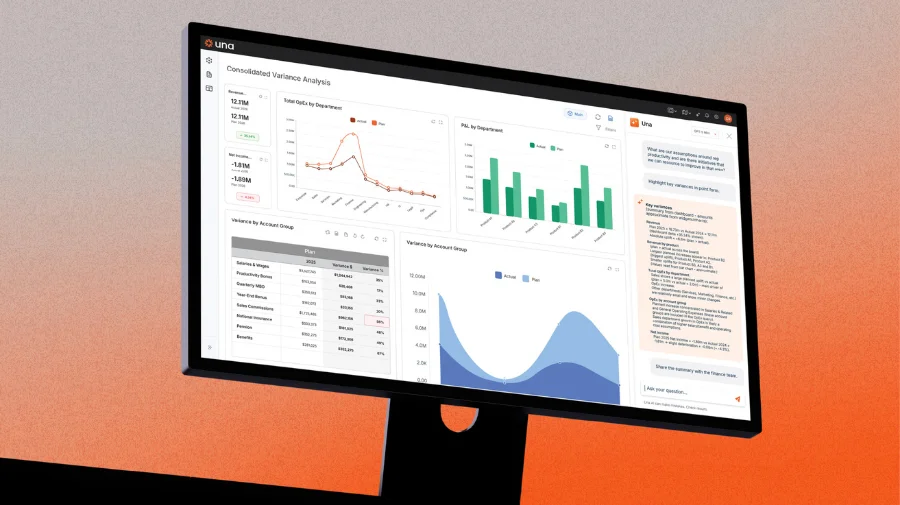
Ready to take control of your budgeting, planning, forecasting and reporting? Schedule a demo and see how Una’s financial planning & analysis software can work for you.
Schedule Demo