
Let’s be real: Traditional FP&A tools weren’t built for today’s business realities. They assume stability. They expect predictable market conditions. They force finance teams to react instead of lead.
But here’s the truth—business doesn’t wait for your annual budget cycles. Your revenue plan should flex, adapt, and evolve just as fast as the market does. The future of FP&A isn’t about better spreadsheets. It’s about better decisions, backed by revenue, operational data, AI-assisted forecasting, and execution accountability.
So, the real question isn’t if FP&A will change. It’s whether your company will keep up.
If your FP&A software locks you into rigid models, congratulations—you’re now running your company based on yesterday’s reality.
The future of FP&A is agile. That means:
The bottom line? If your plan isn't agile, it’s probably outdated.
AI isn’t here to replace finance teams—it’s here to stop you from making wild guesses in board meetings.
Modern FP&A software doesn’t just automate reporting. It guides better decisions by analyzing revenue trends and historical financials to increase forecast accuracy.
Think of AI like the co-pilot that ensures your forecast isn’t built on hope and outdated spreadsheets. Because finance leaders shouldn’t rely on gut feelings when millions are on the line.
Finance teams love precision. Sales teams love optimism. Somewhere in between? A massive gap that leads to missed targets, budget misallocations, and painful post-mortems.
The next generation of FP&A software bridges the finance-sales divide by integrating revenue and operational data into planning:
Because let’s face it—your CFO and operations leaders should be on the same page, not speaking different financial languages.
A financial plan that lives in a spreadsheet? Useless.
A forecast that no one is accountable for? Dangerous.
The future of FP&A connects plans to execution by tracking commitments, ensuring accountability, and surfacing real-time insights on progress.
A plan without execution is just a nice theory. The future of FP&A is about owning the numbers, not just reporting them.
The shift is already happening. The next generation of FP&A software is here—integrating AI, operational data, and execution tracking to drive predictable, profitable growth.
So, finance leaders, ask yourself:
Are you still reacting to last quarter’s numbers, or are you shaping the future of your company?
Because one thing is certain—static planning is dead. The future is agile, intelligent, and execution-focused.
Time to catch up. Or get left behind.
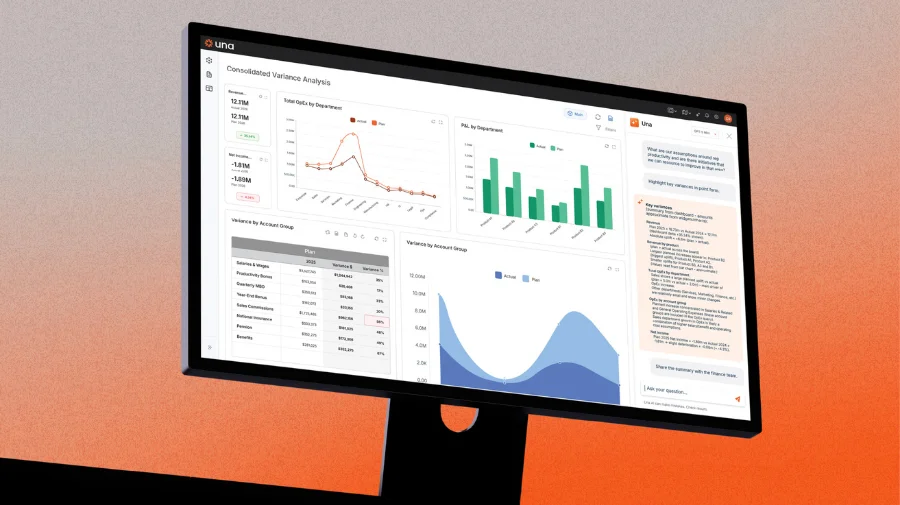
Ready to take control of your budgeting, planning, forecasting and reporting? Schedule a demo and see how Una’s financial planning & analysis software can work for you.
Schedule Demo